Saturday, 16 June 2012

what can you hear amongst the blades of grass?


It feels incredibly special to be able to develop the allotment space at Dunkirk with so many pupils and staff.  We're discovering so much there and every visit brings new surprises.  The children spend so much time looking, exploring and sharing their discoveries - they are full of endless questions about what they can see, hear and smell.   Why are some bees bigger than others?  What is the name of this grass?  Why are there holes in the ground?  Why is this leaf smooth?  What made this mark?   


It's a real privilege to share journeys of discovery with children and vital to make time for the questions to emerge - and equally vital not to rush into answers.  Children's questions are usually incredibly astute and often illustrate just how attentive to detail children are.  They notice so much - and very often the things they notice are things adults often rush past.


Working on the allotment with the children is also an illustration of how crucial it is to return to the same place again and again throughout the year.  It lets you get to know a place incredibly well and you peel away layer after layer as you explore.  It also lets you really get a sense for the seasonal changes of a place - and to see how familiar things are different as the weather and seasons change. 

For children, there's also the incredibly important aspect of routine, repetition and ritual in returning to the same place.  Children need time to revisit places and activities and to test them out over and over: each time they learn new things.  They work like scientists do, testing out hypotheses as they scrutinise the things they discover.  


We've loved watching all the wild flowers emerge on the allotment.  We've planted lots of things to attract wildlife but of course hundreds of plants have found their own way to us.  At the moment there is an area of clover, covered in bees.  The children have been so interested in this - and we've found safe places where we can sit and watch the bees without hurting them (or us).  The children have been fascinated by the many different kinds of bees and just how different they look.  "Why are some bees bigger than others?" asked one of the reception boys a couple of day ago.  He watched the bees for such a long time, making up a song about them, noticing how they weren't all yellow and black stripes.   

   
We're lucky also to have Nottingham Canal run at the back of the allotment.  We're busy making a pond at the moment and although that's not complete yet, because the canal water is just beside us, we are getting so many dragonflies, damselflies and other interesting creatures.  The place is full of birds too and forms a crucial place in the wildlife corridor of the area.  


The allotment is a place where stories emerge - from the children and adults as they discover things and also from the place itself.  It's in the middle of the city, but it feels like another world.  Everywhere you can see signs of the things that happen when people aren't there!  Every day there are new things waiting to be discovered.


Tuesday, 12 June 2012

the coconuts are SHY


Sanctuary for Harmed Young (S.H.Y) Coconuts was formed
by Mr S Tunococ in 1954 as a response to the growing number
of young coconuts held in captivity and used as targets for fairground 'punters'
to throw wooden balls at.  These coconuts
are at Stage 3 of a 6 stage reintegration programme.  As such
they are still shy of humans.  We hope you will respect their
wishes at this delicate time. 

Please look through the viewing windows quietly.  Thank you.


S.H.Y Coconuts were taken to the Lakeside Children's Festival in Nottingham last weekend (June 9th and 10th 2012).  Katy Doncaster and I would like to thank everyone who were gentle and kind and very sympathetic to the plight of the coconuts.  We had George with us, who is at Stage 4 of the programme, so many children were able to meet him close up.  We would like to thank everyone who had suggestions for ways to develop the work of S.H.Y Coconuts, including the gentleman who suggested setting up a telethon to raise funds for the organisation.


Also present with us at the Children's Festival was the Goldfish Liberation Association (Fish LA), which aims to draw attention to the plight of goldfish kept in plastic bags. 


Fish LA was founded in 1977 by Ms Orlanda Fantail, to set free the alarming number of goldfish kept in tiny plastic bags and given away at fairs and fetes as prizes (to people who had to throw hoops roughly at targets).  What started as a small number of liberated fish has now grown, as indeed have the fish themselves.  The fish are fed a mixture of coffee, boiled sweets, bird seed and dandelions and have slowly grown wings over time.  They now fly regularly and can often be found perched in the tops of ash and sycamore trees (as they have a fondness for the seeds).  Luckily the work of Fish LA is less in the UK now that the practise of giving goldfish as prizes is dwindling. 

Please be quiet around the fish (they are still timid after their time inside plastic bags), if you are very lucky you may hear them sing...


Sunday, 27 May 2012

the early bird catches the woodland worm (and the birdsong)


Its a really special time in the woods at dawn, which is incredibly early just at the moment.  On these hot days I think the best time of day to be out is at the very start and end of the day - it's calm, quiet (at least of human noise) and there's so much to be discovered. 


There's so many beautiful wild flowers out at the moment and I'm especially fond of the gentle woodland plants that make no big fuss and quietly cover the woodland floor with a carpet of intricate tiny detail, texture and pattern.  I adore their names too - and the stories that go with them; stitchwort, yellow archangel, woodruff, speedwell, herb robert...  There's such poetry in flower names and a huge sense of history.    


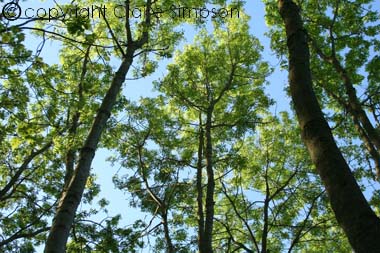
I often get into my local woods really early, throughout the year, because its the time of day when there's an amazing sense of awe and wonder in the woods.  Hardly any other people are about, the light is beautiful and you often can catch very special glimpses of the woodland creatures who will hide away for much of the time.   At the moment the woods are full of bird song early in the morning and its a spectacular thing to listen to the dawn chorus as the early light and warmth of the suns rays filter through the bright green leaves. 


As the leaf canopy gets thicker it becomes harder to see the birds - but that almost makes it all the more special because you get hints as to who is about, but not the full picture.  If you're lucky you get special glimpses as a woodpecker or jay bursts through the leaves in front of you; or maybe a treecreeper will feel safe enough to go into their nest close by. 

Recently I sat with a flask of coffee, early in the morning, watching and listening from my perch on a rock in the middle of a wood - and I realised there was a tiny creature moving through the grass very close by.  I couldn't see it, I could just see the grass move gently as the little being crept along towards where I was sitting.  I kept incredibly still and silent and could see the trail of moving grass showing the path the creature was taking - it must have got very close by and then realised I was there.  The grass suddenly became still and the creature clearly, quietly, crept away from me.  It was a special moment - and filled me with stories and thoughts about what had been there.  A wood mouse?  A shrew?  A snake?  A very small elf with her breakfast, cursing that I was sat on her favourite stone ?  A pixie going home after a night-shift of putting holes in oak leaves? 


 “Deep under this thicket, in places where the sun never shone, there lived birds and small animals.  In calm weather you could hear the rustle of wings and hastily scurrying feet, but the animals never showed themselves.”  The Summer Book - Tove Jansson


“Human beings depend on trees quite as much as on rivers and the sea.  Our intimate relationship with trees is physical as well as cultural and spiritual: literally an exchange of carbon dioxide for oxygen.  Once inside a wood, you walk on something very like the seabed, looking up at the canopy of leaves as if it were the surface of the water, filtering the descending shafts of sunlight and dappling everything.” 
Roger Deakin - ‘Wildwood’


potions, mixtures and remedies


We've been making lots of potions with the nursery, reception and year 2 classes at Dunkirk - and the children have created an amazing set of concoctions with wonderful descriptions.

They've been selecting just very small amounts of ingredients - thereby looking really carefully and closely at things (both in class and on the school allotment and Nature Garden).  There's been wonderful group work and loads of exploring with different mixing bowls, jugs, pipettes, whisks, pestle and mortars and magic sticks...


The potion below took an hour to make and was made entirely in this ice-cream scoop, carried around the allotment lovingly as the ingredients were selected and a potion making song was gently sung (made up by the boy making the potion).


The children came up with really wonderful descriptions of what their potions would do to you - some were very magical and others more medical, depending on different topics the children were exploring.  Some of the potions would turn you into rainbows, or change your behaviour, or make you very small...  Some had to be drunk, others you rubbed into your hair, some you threw up into the air and let it splash down and give you magic powers...


This potion had to be eaten - and would make you fall asleep!  It had taken an hour to make and had to be stirred by every different type of spoon / whisk / pipette there was; and then it had to be hidden for several days before it was ready...


Friday, 4 May 2012

the wonder of very small things


Small, teeny, tiny things... there's so much amazing detail to be found when you peer into nooks and crannies in old walls, look into moss, gaze closely at bark... 


I've always been drawn to the small things - especially when they can be in danger of being missed.  You could so easily step on moss (or see it as something to eradicate from your path) without ever stopping to see the wondrous worlds contained within it.


I know that it's not just me who adores looking at the smallest of details in nature, the children I work with will constantly find things and want to show me their discoveries.  

Children need time to spend hunting for things - and adults who will look with them and share their delights in the things they find.  Children find amazement in a small patch of earth if they are given the opportunity.  They also will show huge respect for the small things they find - but often crucial in this for many children is the role of an adult who will look with the children and also delight in the patterns on a spiders web or the tiny millipede curled up in the soil.

When peeling willow sticks recently one of the year 2 class at Dunkirk found the most minuscule creature under the bark and she was intrigued by the tiny holes on the branch too.  She came across several signs of this - and on several different occasions (another reason why re-visiting activities and places is so important).  She's fascinated and has gone off to look up the creatures and try and discover what they are.


Mini-beasts hold a deep fascination for children and for many are their real and sustained first-hand contact with living creatures.  Mini-beasts are such wonderful shapes and colours and behave in unusual ways; I've known children spend hours watching them - sometimes talking endlessly about what they are observing and also offering many hypotheses about the lives of the insects.  Other children might watch very silently for a long time and be lost in their thoughts as they observe.  Children often want to make homes for mini-beasts and they also often want to "collect" them when outside - which gives so many opportunities for brilliant ways to explore empathy and care.  Again, though, this really needs constant opportunities to be exploring outside, with adults who share this ethos.


Today, when peeling sticks, a child excitedly brought me this piece of willow bark - totally fascinated by the teeny fibre strands that were clearly visible.


And - its not just tiny things you find that can capture you.  Making your own smallest of things is really important...  

Tuesday, 1 May 2012

the world in a pebble


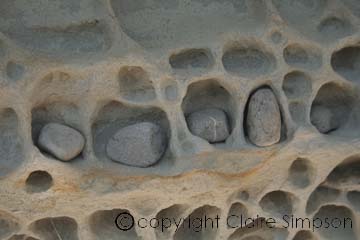
Stones, pebbles, rocks, boulders... they hold great fascination.  Almost everyone I've worked with, children and adults, has loved stones; they are a wonderful "loose part" with which to explore and create.  They are calming to hold, you can create patterns and constructions with them, they can represent many things, you can add things onto them, they have a weight and texture that is captivating, they can be any and all colours - and when wet can shine out like magic...


Recently one of the nursery children at Dunkirk spent two hours with a stone she found in the school community garden - it was her friend, she carried it around, talking and singing to it, showing it the different areas of the garden and then finally making a secret nest for it, so it could have a "lovely home". 


I'm probably one of thousands of people who love to make towers of stones, especially on a beach.  It can take a long time to search for and select the right stones to create a tower or other structure - and you notice so much about the stones (and thereby the whole area around you) as you look.


I love the poem "maggie and millie and mollie and may" by e e cummings, there's a part of it which says

" may came home with a smooth round stone
as small as a world and as large as alone" 


Sometimes you find magical places where a combination of nature and people have created really intriguing compositions - often people will respond to the power of the places in which they find themselves.


one potato, two potatoes, three potatoes, four...


I love digging in the soil with children, they find such treasures and the earth absorbs their energy and gives them back delights as they discover things hidden inside.  Soil has rich textures, smells, colours and so many unexpected wonders.

When working in the Dunkirk Community Garden recently with the year two class, the children were incredibly excited at discovering potatoes buried inside the mud.  They were digging a space to prepare the soil for the vegetable seedlings they have grown.   As they dug and dug they uncovered more and more potatoes - of all shapes and sizes.  They were filled with purpose, enthusiasm and commitment as they set themselves the task of seeing how many potatoes they could find. 

It was a gift from last year, when this particular set of potatoes must have got missed when the crop was dug up last summer (and I have lovely memories of cooking the potatoes on the fire with the reception children last year).


The year two children began to tell stories with the potatoes, to use lots of gorgeous descriptive language and they were absorbed in exploring measurement and counting as they found more potatoes.  They were digging with a mix of forks and spades, so some potatoes got cut in half as they were dug - and the children were fascinated by that.  They were really interested in the roots coming from the potatoes and the textures and patterns in the skins.


They wanted to take the potatoes back to school and cook them - and then as we discussed where the potatoes had come from, what they were doing in the soil and what they might want to do. They decided to plant the potatoes again on their compost heap, to see what would happen.

We read the wonderful book THE POTATO PEOPLE by Pamella Allen (it couldn't have been a more perfect story for the situation). In the story, which has beautiful drawings showing how potatoes grow, the grandma and grandson end up with hundreds and hundreds of potatoes from the two potatoes they have planted.  The class had really inspiring conversations about what they would do if they ended up with "thousands of potatoes" - which might include opening a potato restaurant serving lots of dishes made from potatoes, potato drinks AND you would be able to get seed potatoes to take home to grow more of your own.


So, yesterday, we decided to make our own potato people and to create an animation with them.  The children were really absorbed in decorating potatoes and making them into different characters, they gave them names and characteristics.   They made potato prints too and more potato things will follow.  We've got potatoes chitting in class so they can watch them change - and more potatoes planted in the garden so we can dig up and cook a crop later in the summer.